A Grand Canyon Junior Ranger Day Works Best When the Plan Stays Manageable
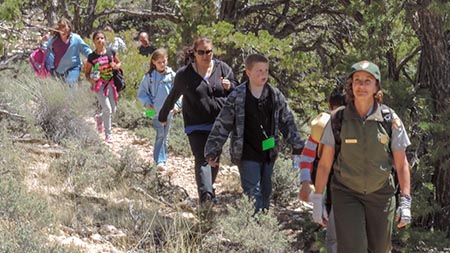
Grand Canyon is the kind of destination that can make family itineraries expand too quickly. Adults arrive with a list of overlooks, ranger talks, trail ideas, and scenic drives. Children often need something smaller: one focal activity, a dependable rest point, and a pace that still leaves room for curiosity.
The park's Junior Ranger Family Programs page supports that smaller approach. It frames the visit around ranger-led participation rather than simple sightseeing, while the broader National Park Service Junior Ranger guidance reinforces the idea that parks can become more approachable when children have a role in the day. For stroller wagon families, that shift matters. It turns the wagon into a support tool for one well-shaped experience instead of an awkward add-on to an overbuilt schedule.
Why Big Parks Work Better With a Narrower Plan
Grand Canyon is the kind of destination where family itineraries tend to expand before the car doors open. Adults arrive with a list of overlooks, ranger programs, trail possibilities, and scenic drives. Children often need something much smaller: one clear focal activity, a reliable rest point, and a pace that leaves room for curiosity instead of consuming it.
The park's Junior Ranger Family Programs page supports a narrower approach. It frames the visit around ranger-led participation and child-oriented engagement rather than around sightseeing volume. The National Park Service's broader Junior Ranger guidance reinforces the same direction: parks become more approachable when children have a role in the day, not just a view.
That shift changes how the whole outing should be planned. A day built around one program, one manageable rim segment, and one clear reset point is not a compromise version of a Grand Canyon visit. Based on official program framing, it may be the version that actually works for families with younger children.
What the Junior Ranger Structure Gives a Family
The Junior Ranger model's practical value is that it answers the question children ask before adults ever say a word: why are we here and what do I do? Without that answer, a major national park can feel abstract to young visitors. The drama is visible but not personally relevant. The outing turns into adults looking at things while children manage their own boredom.
With a booklet activity or a ranger-led program, the visit gains structure. One program can anchor the morning. One overlook cluster can follow. One meal break can close the arc. That segmentation is not just child-management. It preserves adult attention too. When the day has a clear center, the temptation to keep adding stops is easier to resist.
For families traveling with a stroller wagon, the segmented plan fits naturally. The wagon can hold the booklet, water, a hat, and the few items that keep a young child connected to the outing between walking and sitting moments. It supports the pauses that the Junior Ranger structure already builds in rather than working against a fast-moving itinerary.
The Canyon's Physical Reality for Families
The Grand Canyon is not a universal stroller-wagon destination. Families should check current route conditions, weather, elevation effects, and specific access details before planning around any particular path. The most realistic wagon use is in developed visitor areas and on shorter, paved, or smoother segments near visitor centers and established viewpoints. Rim trails vary widely, and conditions can change.
Climate is its own planning factor. Sun, wind, and altitude add strain to even short visits, particularly for young children. A wagon can carry the items that reduce that strain — a shade layer, extra water, sun protection — but it cannot override the physical environment. Families who underpack for the canyon are more likely to cut the visit short. Families who overpack turn the wagon into a logistical problem.
The most useful mindset is to treat the stroller wagon as a support tool for the day's center, not a reason to extend the itinerary. One good program and a short rim walk may be enough for younger children to form a strong memory of the place. The canyon does not need to be experienced in full on the first visit to feel significant.
Emma Wilson
Lifestyle Contributor
Lifestyle blogger and outdoor enthusiast who shares real family adventures and practical parenting tips.
Tags
Emma Wilson
Lifestyle Contributor
Still have questions?
Can't find what you're looking for? Our team is here to help! Whether you need clarification, have a specific question, or want to learn more about our services, we'd love to hear from you. Let's get you the answers you need.
Contact usFAQ
Not necessarily. It is more useful for visitor-center movement, short promenade segments, and family pacing than for rugged trails or areas with major elevation changes.
A shorter plan built around one program, one viewpoint sequence, and clear rest breaks usually works better than trying to combine too many stops.
Stay Updated
Get the latest stroller wagon industry news, trends, and insights delivered to your inbox weekly.
No spam, unsubscribe anytime. Read our privacy policy.