A Stroller Wagon Beach Day at Indiana Dunes Starts With the Boardwalk
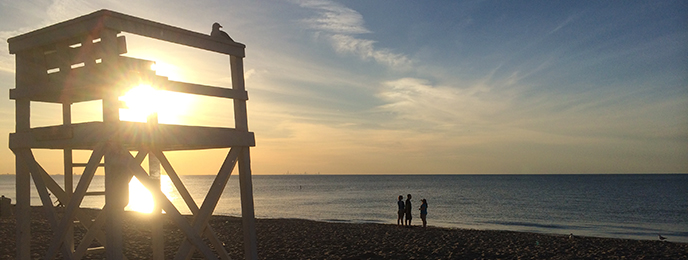
Beach days with small children often go wrong before anyone reaches the water. The first struggle is usually not swimming or snacks. It is the transfer from parking lot to shoreline: towels in one hand, shoes in another, a tired child already losing interest, and no clear place to regroup.
Indiana Dunes National Park offers a useful case study in how a stroller wagon can fit a beach outing without overpromising. The West Beach page highlights a developed beach area with boardwalk access and visitor services, while the park's accessibility page points to beach access features and mobility support options. Taken together, those details suggest a family outing where the structured parts of the visit matter just as much as the sand itself.
Where a Beach Day Gets Harder Before the Water
Most family beach outings do not break down in the water. They break down before the family reaches it. The stretch from parking area to shoreline — carrying towels, sunscreen, snacks, extra clothes, and a child who is already recalibrating to the wind — is where the day first starts to fragment.
West Beach at Indiana Dunes National Park offers a more structured approach to that problem. The park's West Beach page highlights boardwalk access and developed visitor services. The accessibility page describes beach access features and mobility support options. Those details are most useful not as a guarantee of wagon compatibility on every surface, but as a reference point for where organized movement is most plausible within the site.
For a stroller wagon family, the boardwalk and developed entry sequence represent the stretch of the day where the wagon earns its value. Towels, shade layers, water, and smaller items for children can stay together during the walk in. The return — sandy, tired, and sometimes more hurried than the arrival — benefits from the same organization. The wagon does not transform a beach day, but it can make the bookends of it noticeably calmer.
What West Beach's Layout Supports
A developed beach with a clear access path changes what a stroller wagon can realistically do. The family can stay organized longer before the terrain shifts. Shoes have a place. Wet clothes have a return spot. Children who have lost interest in the water have somewhere to sit without requiring adults to unpack the car a second time.
That kind of order matters on a Lake Michigan day. Wind, shifting temperatures, and shoreline conditions can change the character of the visit faster than families often anticipate. A stroller wagon gives the outing a reliable reset point at the edges: before the family spreads out fully toward the water and during the period when everyone is ready to leave but nothing is yet packed up.
Indiana Dunes is a useful case study for exactly this reason. It demonstrates the beach-day logic that works most consistently: the outing is about the bookends as much as the middle. If arrival and exit feel manageable, the time near the water is more enjoyable. If those transitions are chaotic, the whole day compresses into effort rather than leisure.
The Limits Worth Planning Around
The accessibility and boardwalk details should inform preparation, not replace it. Current route conditions, seasonal maintenance, and specific amenity availability can all affect how smooth the visit feels. Families should verify current site details before depending on any particular path or access feature.
The bigger practical limit is loose sand. A stroller wagon performs differently on a firm, supported path than it does on deep, uneven beach surface. Building the outing around the developed access sequence — and staying close to the core amenities rather than ranging far along the shoreline — keeps the wagon useful and prevents it from becoming dead weight.
Packing lighter also helps. The temptation at a beach destination is to treat the wagon as a freight solution and fill it with chairs, a full cooler, and every toy the family might want. A more effective approach is to carry the items that protect the transition moments: water, sun layers, towels, and one snack per child. The point of the wagon is to make the stop more orderly, not to justify a heavier load than the outing actually needs.
Emma Wilson
Lifestyle Contributor
Lifestyle blogger and outdoor enthusiast who shares real family adventures and practical parenting tips.
Tags
Emma Wilson
Lifestyle Contributor
Still have questions?
Can't find what you're looking for? Our team is here to help! Whether you need clarification, have a specific question, or want to learn more about our services, we'd love to hear from you. Let's get you the answers you need.
Contact usFAQ
No. The park lists specific accessibility features and beach equipment, but families should still check current conditions and route details before assuming the full beach area will be easy with a wagon.
The most realistic use is for arrival, boardwalk movement, shade gear, towels, snacks, and rest breaks near developed access points rather than deep soft-sand hauling.
Stay Updated
Get the latest stroller wagon industry news, trends, and insights delivered to your inbox weekly.
No spam, unsubscribe anytime. Read our privacy policy.