Blue Ridge Parkway Family Stops Work Best When the Trail and Picnic Stay Close Together
Some family road-trip stops fail because they ask too much of one hour. The parking area is far from the good view, the trail is longer than it sounded, or lunch and walking happen in two different zones that do not connect well with tired children. The Blue Ridge Parkway offers a more promising model when families choose stops where the trail and the picnic logic stay close together.
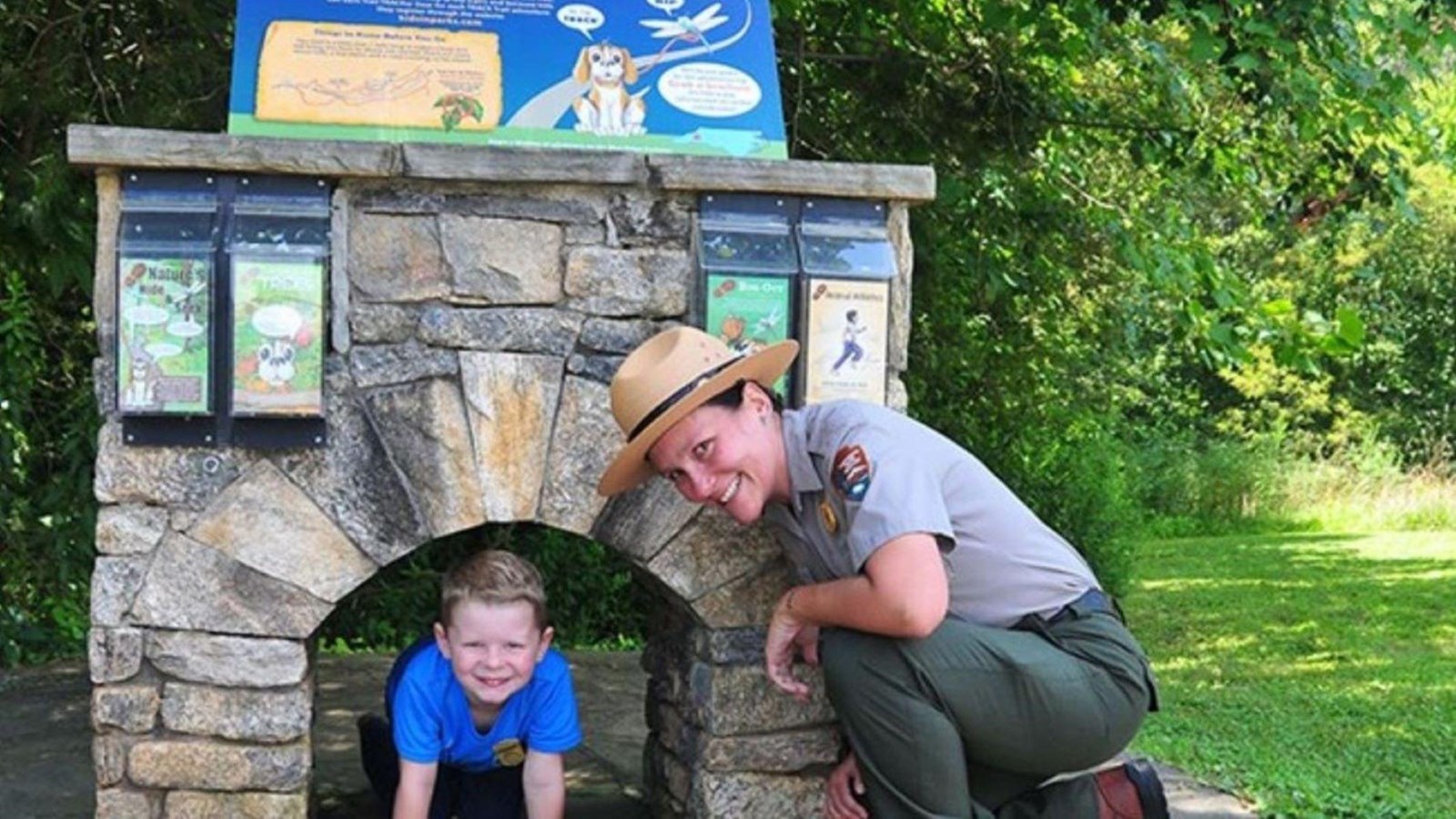
The Blue Ridge Visitor Center TRACK Trail for kids and the Price Lake Picnic Area TRACK Trail both point in that direction. They frame the parkway not as a nonstop scenic drive, but as a place where one short trail, one clear stop, and one nearby reset point can be enough. For stroller wagon readers, that is a valuable distinction. A wagon tends to fit best when the outing is compact and layered, not stretched.
What Makes a Parkway Stop Work for Families
A good parkway stop for a family with young children typically needs three things: a parking situation that feels manageable, a movement pattern short enough that children stay curious rather than depleted, and somewhere obvious to pause after the walking part is over. Without all three, the stop can feel like effort rather than outing.
TRACK Trail-style stops are useful references here because they are designed around exactly that structure. They invite children to notice, collect, and observe rather than asking the whole family to conquer a long outing in one push. Families are given a clear purpose for the stop, not just a view. The movement is scaled for participation, not endurance.
For a stroller wagon, that design matters. A wagon fits best when the stop is short, layered, and has a natural landing point — picnic table, visitor area, or a flat, obvious reset space. It struggles when families try to extend the stop beyond its natural logic because the scenery is compelling or the day has more time in it than expected.
The Trail-Plus-Picnic Pattern
One of the clearest practical structures on the Blue Ridge Parkway is the combination of a short interpretive trail and a nearby picnic area. These two elements solve the recurring problem of the family road-trip stop that separates movement and rest into different zones. When the walk and the meal happen in the same orbit, the stop gains coherence.
For stroller wagon families, this pattern removes one of the most energy-draining road-trip habits: unpacking twice. If lunch, observation, and a short walk happen in the same compact space, the wagon can carry the same essentials through the whole stop. Water, a small lunch, an extra jacket, a hat, and one item for each child who needs a rest point on the return leg. That is a manageable load and a realistic one.
The trail-plus-picnic format also creates an exit point that works. Children who have eaten and walked a short, interesting trail are usually ready to return to the car before they hit the point of open resistance. The stop ends on its own terms rather than being cut short by frustration.
Staying Compact at Every Pull-Off
The Blue Ridge Parkway makes it easy to imagine fitting in more stops than the day can actually hold. Scenic roads encourage ambition in planning. Children often enforce the corrections at the second or third pull-off.
A stroller wagon helps most when it makes the family more selective rather than more ambitious. One good picnic-area stop with a child-friendly trail is usually more satisfying than three rushed viewpoints. The wagon carries the essentials for one well-paced hour, not the supplies for every contingency.
Surface conditions, grades, seasonal maintenance, and weather all affect how any given stop will feel on the ground. Families should check current route details before depending on a particular path. The general principle that TRACK Trail stops tend to favor shorter, more accessible movement patterns is a starting point, not a guarantee about specific conditions on arrival day.
Restraint in stop selection may be the sharpest planning skill on a parkway trip. The most successful stop is often the one the family left time for and did not try to combine with anything else. In that kind of plan, the stroller wagon earns its keep quietly — moving the family through one well-chosen stop without the logistics absorbing the day.
Emma Wilson
Lifestyle Contributor
Lifestyle blogger and outdoor enthusiast who shares real family adventures and practical parenting tips.
Tags
Emma Wilson
Lifestyle Contributor
Still have questions?
Can't find what you're looking for? Our team is here to help! Whether you need clarification, have a specific question, or want to learn more about our services, we'd love to hear from you. Let's get you the answers you need.
Contact usFAQ
Shorter stops keep the wagon useful for transitions, snacks, and tired children without turning it into extra equipment on a long or technical trail.
No. Parkway conditions vary, so families should confirm route surfaces, current trail status, and site amenities before depending on a wagon.
Stay Updated
Get the latest stroller wagon industry news, trends, and insights delivered to your inbox weekly.
No spam, unsubscribe anytime. Read our privacy policy.