Why Stroller Wagons Are Moving Closer to Travel Systems
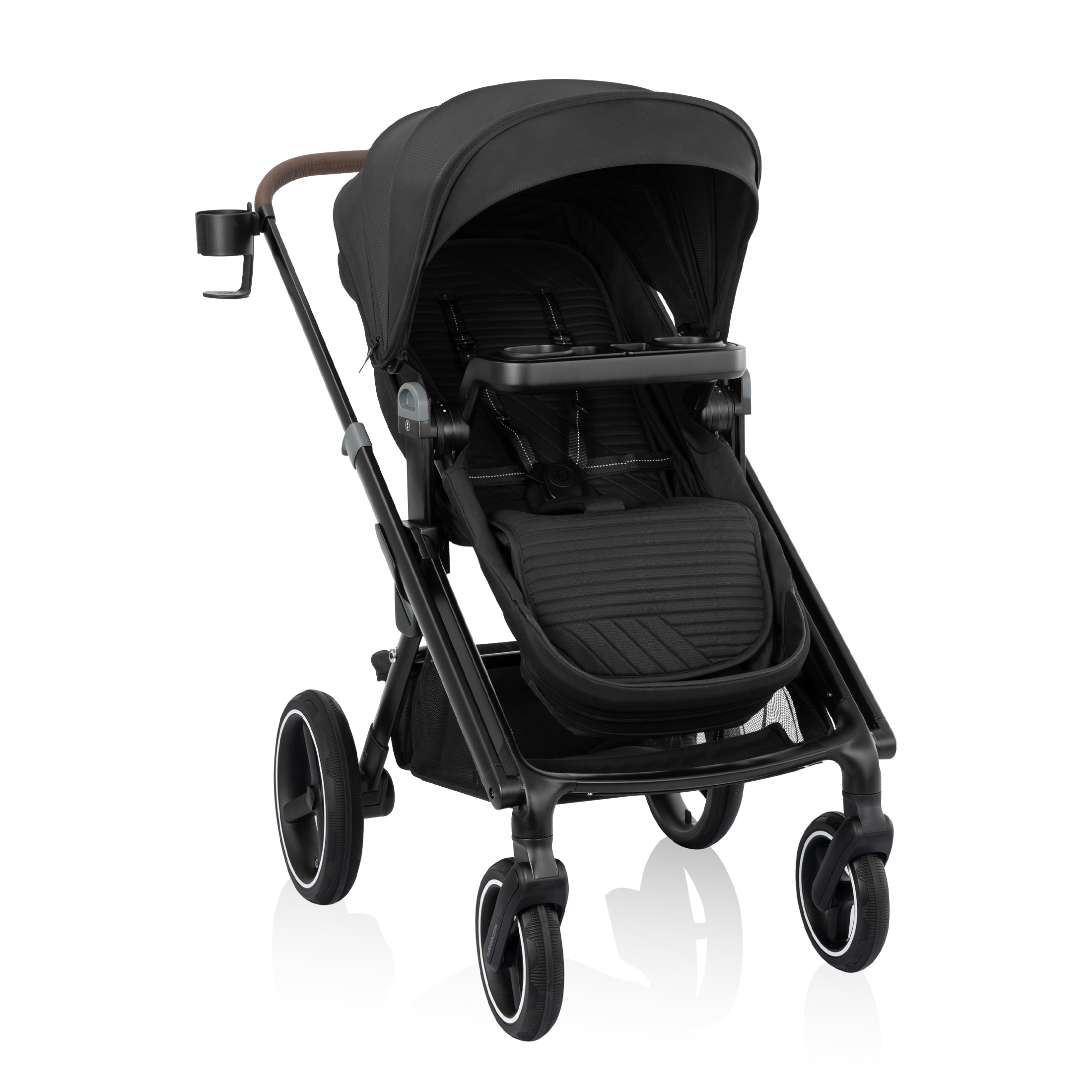
For years, stroller wagons sat mostly downstream from the traditional travel-system purchase. Families bought a classic infant stroller first, then considered a wagon later when children got older or outings became more gear-heavy. That sequence is starting to loosen.
Official product positioning from Evenflo suggests that stroller wagons and wagon-adjacent hybrids are being pulled closer to the travel-system conversation itself. The significance is not just about one product launch. It is about where brands now think wagon-style mobility can compete in the broader juvenile-products market.
The Purchase Sequence That Brands Are Trying to Rewrite
The conventional stroller wagon entered most families' lives as a second or third mobility product — something purchased after an infant stroller had already been retired or outgrown. That positioning kept the category commercially healthy but also structurally limited. Brands that only capture a family after the infant stage miss the largest, highest-consideration purchase in the household's mobility history.
Evenflo's current product strategy shows one way brands are trying to change that. The Transformer Stroller to Wagon page describes a product that converts from stroller to wagon without extra parts and adapts as a child grows. The $529.99 price point signals intent: this is not a supplementary purchase. It is positioned as a platform that competes at the primary mobility stage rather than waiting for a family to graduate past it.
Evenflo's Pivot Xplore Dreamz page reinforces the same direction from a different angle. The product is described as an all-terrain stroller wagon with a bassinet insert supporting children from 6 months to 33 pounds, plus compatibility with an infant car seat adapter. It can be pushed like a stroller or pulled like a wagon. It accommodates two children with a combined 110-pound capacity.
Taken together, those pages show more than isolated feature additions. They show brands actively testing how far wagon-style design logic can move toward the part of the market traditionally served by modular infant strollers and travel systems.
What Lifecycle Thinking Actually Changes for Brands
The commercial logic behind this shift is clear. If a product can credibly enter a household at month six rather than month twenty-four, it captures more of the family's mobility budget, more of the trust built during early parenting, and more of the product longevity that supports premium pricing. Fewer product transitions mean a stronger case for a higher-ticket platform rather than a series of overlapping single-stage purchases.
But lifecycle positioning is not only a pricing opportunity. It also changes the product expectations that brands have to meet. Infant-stage use brings heavier scrutiny: fit, recline geometry, restraint configuration, compatibility claims, and documentation all matter more to a parent equipping for a newborn than to one buying a weekend outdoor wagon for a three-year-old.
This is where the transition creates real strategic risk alongside the opportunity. A brand that markets wagon-style products with infant-stage language but builds to a toddler-wagon standard is making a claim it may not be able to defend in practice. Compatibility with infant car seats requires verified adapter fitment, not just language suggesting it is possible. Bassinet insert use requires its own safety validation. The further a stroller wagon moves toward newborn positioning, the more seriously it needs to be engineered and documented for that population.
Two Paths Through the Convergence
Not every stroller wagon brand is taking the same route into this territory. The product record suggests at least two distinct approaches to the same directional shift.
The first is the full hybrid model, where a single product is designed from the ground up to serve both stroller and wagon functions across multiple child stages. Evenflo's Transformer exemplifies this approach. The product changes form rather than simply adding accessories, and the brand's positioning leans into the transition as the core value proposition rather than as an add-on feature.
The second is the modular retrofit route, where an existing stroller wagon gains compatibility with infant-stage accessories — bassinet inserts, car seat adapters, flat-rest configurations — without changing the product's underlying identity. This approach has lower development cost but can produce harder-to-defend compatibility claims if the accessories were added as afterthoughts rather than designed as part of the original platform.
Evenflo's current assortment shows both impulses at work across different products. That makes it a useful case for understanding how the category is exploring the same direction through different execution paths.
What Retail and Post-Sale Infrastructure Have to Catch Up With
If stroller wagons continue moving toward the first major family-mobility purchase, retailers will face a category that does not fit neatly into existing assortment structures. Products designed for infant-stage use belong near modular strollers and travel-system bundles, not just in the outdoor family gear section. Comparison pages need to explain age-stage fit, accessory compatibility, and the tradeoffs between a dedicated infant system and a multi-stage hybrid platform.
After-sale infrastructure also needs to evolve. A product bought for earlier-stage use generates more questions than a later-stage wagon: compatibility updates, accessory availability, weight-limit transitions, and warranty expectations all become more complex when the product is used from six months rather than eighteen. Brands that move toward travel-system territory without strengthening their support infrastructure are building credibility gaps into the product experience.
The most useful read of where this is headed is probably not convergence as a destination but as a pressure. Stroller wagons are being pulled closer to the first mobility decision without necessarily replacing conventional travel systems. What they are changing is the comparison set — and in doing so, they are raising the standards they have to meet in engineering, documentation, and retail communication.
Sarah Johnson
Senior Editor
Parenting expert and stroller wagon enthusiast with over 10 years of experience in testing and reviewing baby gear.
Tags
Sarah Johnson
Senior Editor
Still have questions?
Can't find what you're looking for? Our team is here to help! Whether you need clarification, have a specific question, or want to learn more about our services, we'd love to hear from you. Let's get you the answers you need.
Contact usFAQ
It refers to wagon-style products moving closer to the newborn and infant-transport part of the market through bassinet inserts, infant-car-seat compatibility, or bundled travel-system positioning.
No. But official product pages show more brands testing ways to extend wagon-style mobility into earlier child stages rather than limiting it to older toddlers.
Stay Updated
Get the latest stroller wagon industry news, trends, and insights delivered to your inbox weekly.
No spam, unsubscribe anytime. Read our privacy policy.