Why Stroller Wagons Still Sit in a Moving Standards Framework

Stroller wagons have become a visible product class, but the standards environment around them is still less settled than many shoppers assume. That does not mean the category is unregulated. It means the category is still being interpreted through frameworks that were built around conventional carriages and strollers, while standards bodies and regulators continue to evaluate how hybrid wagon-style products should fit.
That distinction matters for almost everyone in the chain. For brands, it affects design targets, documentation, and product claims. For retailers, it shapes what kinds of safety and compliance questions need to be resolved before products scale across channels. For families, it helps explain why stroller wagons can look mature as a retail category while still sitting inside a moving technical framework behind the scenes.
A Category Without Its Own Dedicated Standard
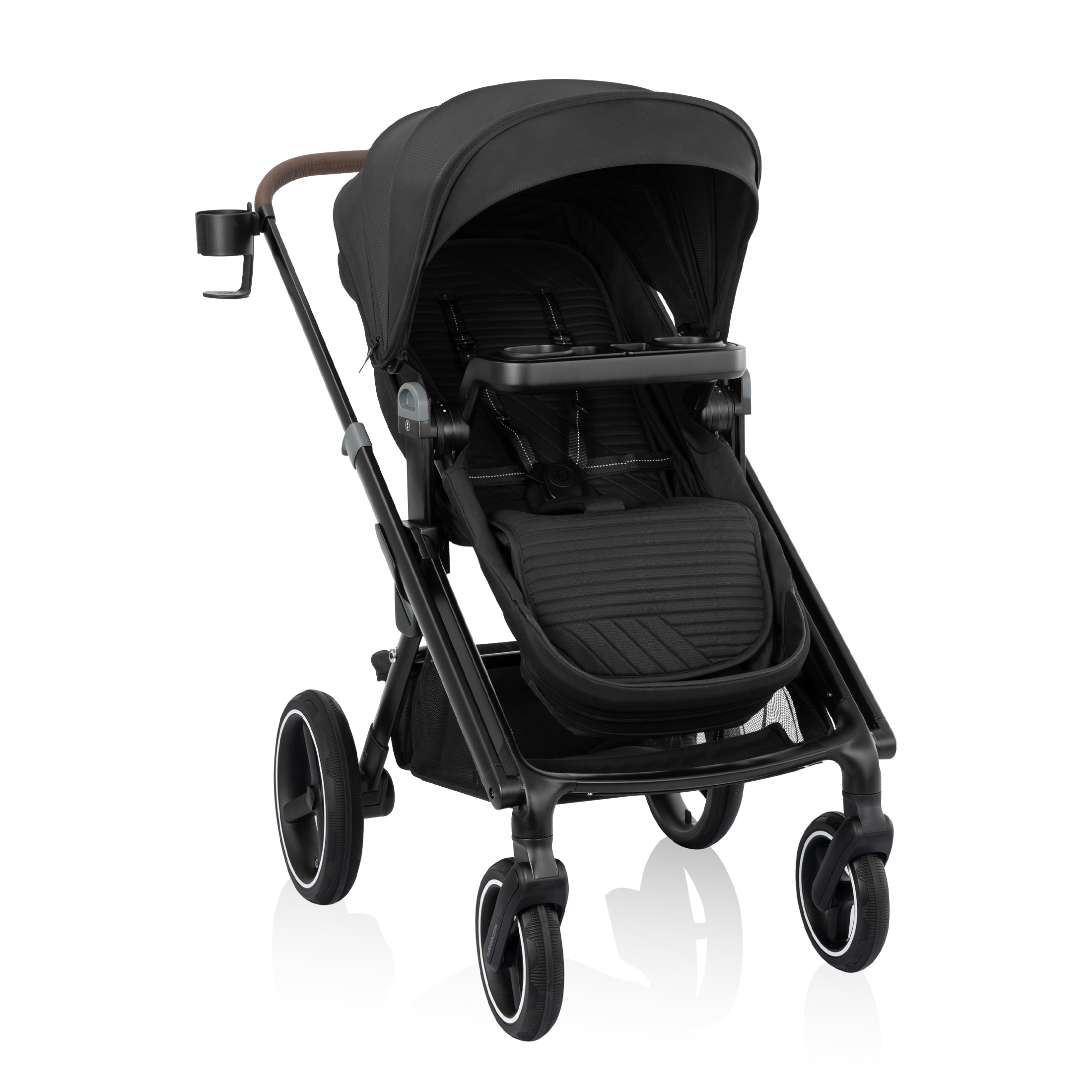
The clearest federal anchor is the CPSC's business guidance for carriages and strollers, which codifies the U.S. rule at 16 C.F.R. part 1227 and incorporates ASTM F833 with CPSC modifications. That standard was built around conventional strollers and carriages. It is real, active, and directly applicable to products that carry children in a seated or semi-reclined position with a pushed handle — but it was not written with stroller wagons in mind.
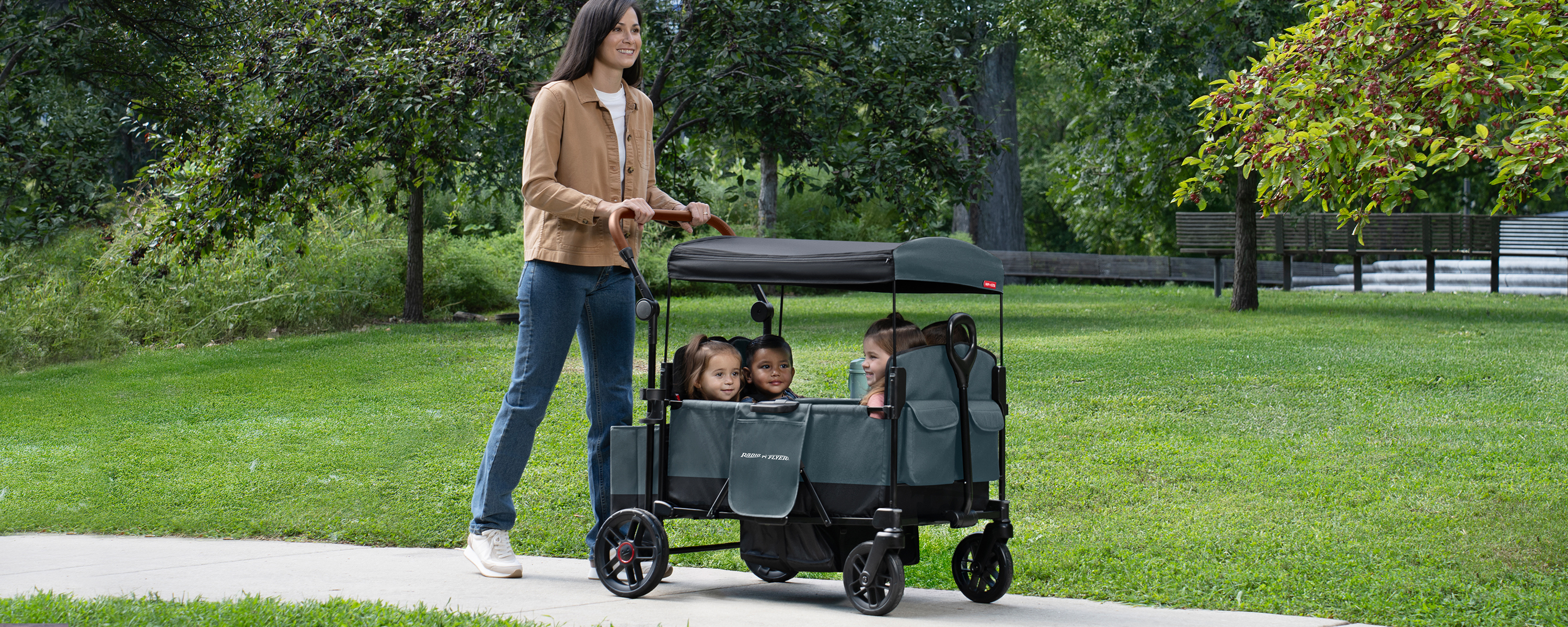
That gap is not just a terminology issue. A classic stroller has a well-understood geometry: pushed from behind, one or two children facing forward, compact folding. A stroller wagon can involve side entry, pull-handle use, multi-child capacity in a wider cabin, modular cargo configurations, or dual push-pull operation. Some of those attributes push comfortably inside F833's scope. Others sit in zones that the standard was not explicitly designed to address.
This does not make stroller wagons ungoverned. But it does mean that the way specific requirements — braking, stability, restraint geometry, occupant retention, impact testing — are applied can become more complicated when the product architecture differs meaningfully from a traditional stroller. That complexity is not resolved by mapping a stroller wagon onto the nearest conventional product definition. It requires active standards work.
What ASTM and CPSC Activity Signals
The public record shows that standards bodies and regulators are treating stroller wagons as a category worth specific attention. The CPSC has publicly logged participation in an ASTM F15.17 Stroller Wagon Task Group meeting, described in the commission's June 11, 2025 calendar as a discussion of "stroller-wagon hybrid products." That entry is a small but meaningful signal: stroller wagons are not being treated as a terminology footnote inside the broader stroller standard. They are being discussed as a hybrid class that warrants its own focused conversation within the standards process.
ASTM's public work-item record adds another reference point. The listed revision work item WK94774 ties to a revision of F833-21, the main stroller and carriage performance specification. The coexistence of an active revision track and a stroller-wagon task group suggests that the standards system is evolving in the same space that matters most for this category — but that the evolution is still underway rather than concluded.
For brands and retailers watching from the outside, the practical implication of these signals is this: the category is being pulled deeper into formal stroller-oriented analysis. Design choices, test references, and product-claim language will increasingly be evaluated against that analysis, not against a looser interpretation of what a wagon is.
Why Hybrid Architecture Creates Specific Documentation Pressure
The standards challenge with stroller wagons is not simply definitional. It is also dimensional. When a product departs meaningfully from the geometry assumed by an existing standard, several documentation questions follow.
Which version of the incorporated standard was used? If F833 has been revised and a product was tested against an older version, that gap matters — especially if the revision addressed requirements relevant to the product's specific configuration. What test approach was used for requirements where the standard's geometry assumptions do not cleanly apply? How were performance thresholds set for elements like restraint load testing when the seating orientation, entry point, or rider position differs from a standard stroller?
Those are not hypothetical questions. Retail compliance teams, product liability insurers, and large-channel procurement teams regularly ask them. As stroller wagons become a more mainstream category, the quality of answers to those questions is becoming a more visible differentiator between brands that have done serious engineering and documentation work and those that have relied on surface-level compliance language.
The Consequence for Brands Operating Inside a Moving Target
The practical takeaway for stroller wagon brands is not to wait for a final standards answer before acting. The official record already shows a category being discussed within the stroller standards ecosystem. That means design and testing choices should be made with the assumption of serious scrutiny, particularly around braking systems, stability, restraint and occupant-retention performance, and labeling.
It also means that product-claim language carries more weight than it might appear to. A stroller wagon marketed as a child transport solution that competes with conventional strollers makes a different standards argument than one positioned primarily as outdoor family gear. The stronger the stroller-like claim set, the harder it becomes to treat classification as an afterthought.
For retailers, the ongoing ASTM and CPSC activity is a useful reminder that a category growing quickly in public may still have its technical language being worked through in professional forums. A merchandising team that asks what standard version was tested against, how the product was classified for compliance purposes, and whether the documentation matches the advertised use is asking the right questions — not being unusually cautious.
The standards story in stroller wagons is not a sign of dysfunction. It is a normal part of how durable product expectations become precise as categories mature. The category's long-term legitimacy depends on exactly this kind of technical clarification catching up to where brands and families already use the products.
Michael Chen
Market Analyst
Market analyst specializing in the baby products industry with a focus on stroller wagon trends and market data.
Tags
Michael Chen
Market Analyst
Still have questions?
Can't find what you're looking for? Our team is here to help! Whether you need clarification, have a specific question, or want to learn more about our services, we'd love to hear from you. Let's get you the answers you need.
Contact usFAQ
The available official sources point to stroller wagons being discussed inside the broader strollers framework, with ASTM and CPSC activity continuing around stroller-wagon hybrid products.
Because it signals that scope, definitions, and test expectations for stroller-wagon hybrids are still being worked through in a formal standards-setting process.
Stay Updated
Get the latest stroller wagon industry news, trends, and insights delivered to your inbox weekly.
No spam, unsubscribe anytime. Read our privacy policy.