How Price Segmentation Is Taking Shape in Stroller Wagons
One of the clearest signs that stroller wagons are becoming a more mature business category is simple: the pricing is starting to make more sense. Not in the sense that products are becoming cheap, but in the sense that brands are creating clearer bands between value, mid-tier, and premium positioning.
Official product pages from Radio Flyer and Evenflo show that this is no longer a category where every wagon competes inside a vague premium blur. Instead, brands are defining more distinct price ladders and feature stories, which gives retailers and families a better idea of what each price step is supposed to buy.
From Novelty Pricing to Price Architecture
Earlier in the stroller wagon category's growth, pricing was largely undifferentiated. Products clustered in a loose premium range, and the gap between a $300 wagon and a $600 one was rarely explained in terms that held up under scrutiny. The category's novelty did the selling. That logic is wearing thin.
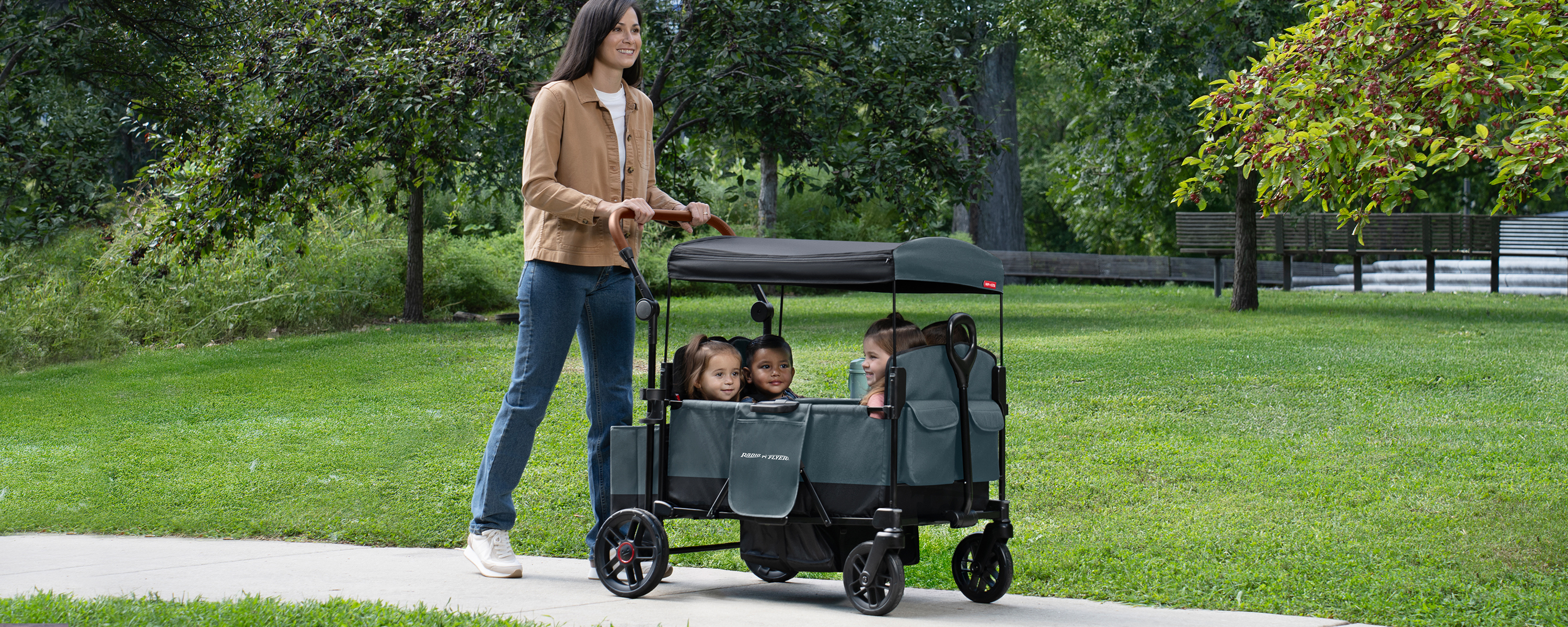
Radio Flyer's Pathfinder product page is unusually transparent about how a brand can anchor a value-led structure. The company lists three launch models with straightforward price points: $299 for the two-seat Pathfinder, $369 for the four-seat Pathfinder, and $399 for the Pathfinder+. The page frames the line around "strong value and everyday versatility" and emphasizes included accessories such as a snack tray, canopy, cup holders, storage, and compact folding.
This matters because it shows value positioning without stripping down the product story. Radio Flyer is not marketing Pathfinder as a compromise. It is presenting a mainstream stroller wagon with visible utility, at a price that makes the opening tier accessible rather than aspirational.
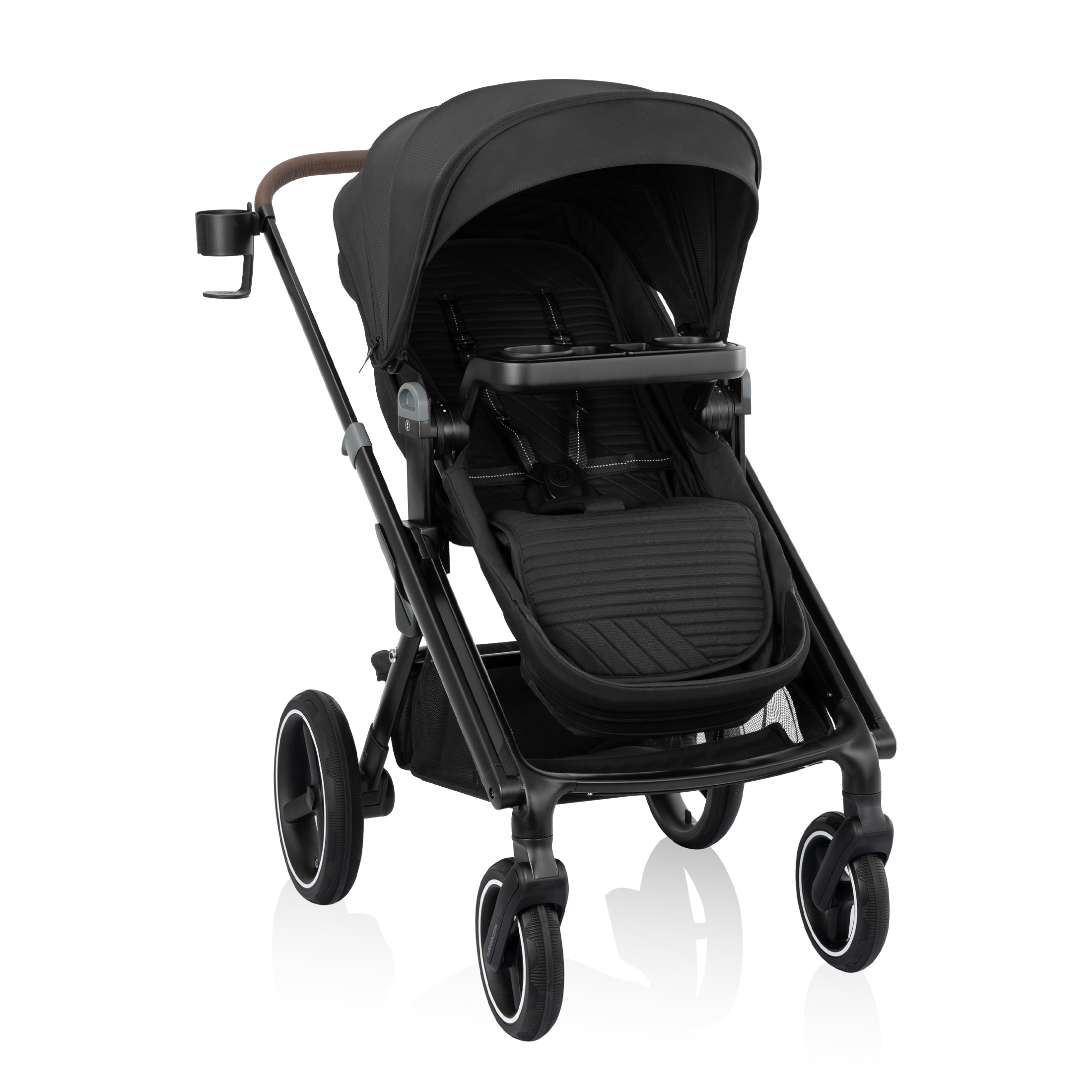
Evenflo's Transformer page lands higher at $529.99, but it tells a different product story entirely. The price is tied to hybrid functionality and lifecycle extension, not simply to more seats or a larger frame. Evenflo is asking buyers to pay into platform logic: stroller and wagon in one product, with travel-system positioning built into the pitch.
WonderFold's current L Series positioning reinforces the picture from another direction, emphasizing city-ready, all-terrain use and design-led differentiation. The public product framing across these three brands alone is enough to show that the category is no longer selling one generic promise. Different products are now making different arguments about what the price buys.
What Feature Packaging Reveals About Tier Logic
Seat count was once the primary lever separating stroller wagon price points. Rider capacity still matters, but the category's more interesting development is that feature packaging has become an independent structuring tool.
Accessory inclusion, push-pull flexibility, infant-seat compatibility, frame geometry, and side-entry or accessibility stories are all now used to separate tiers — not just to add options. A two-seat wagon can cost more than a four-seat wagon if the two-seat product carries a stronger design story, a more premium frame material, or a lifestyle positioning that targets a different buyer profile.
That is a meaningful change. When feature architecture drives price as much as physical size, brands have more room to work. They can build a credible mid-tier product without simply adding seats or accessories to an entry model. They can justify a premium product without needing the largest frame in the lineup. That gives category pricing more internal logic and makes the comparison process more legible for shoppers.
What Segmentation Means for Assortment and Shelf Strategy
For retailers, clearer price segmentation changes how stroller wagons can be slotted. Not every product now needs to function as a premium hero item. A merchant can justify opening-price options, feature-rich mainstream models, and higher-end platform products as distinct roles rather than near-duplicates competing for the same shopper.
That usually leads to better conversion across the full assortment. Shoppers with different budgets can find a clear entry point without feeling that the category only makes sense above a certain spending threshold. Retailers also benefit from cleaner comparison pages when the differences between tiers are explained through feature logic rather than brand prestige alone.
For families, a more segmented market may reduce confusion rather than add to it. When every stroller wagon claimed to do everything, buyers had to decode tradeoffs themselves. When brands define clearer price ladders, the comparison becomes more intuitive: entry-level accessibility, mid-tier practicality, and premium lifecycle flexibility begin to look like different answers to different needs rather than arbitrary pricing.
The Risk Side of Clearer Tiers
Segmentation creates clarity, but it also creates accountability. When a brand establishes a tier structure, it is implicitly promising that the differences between levels are real and defensible. Shoppers who upgrade from a $299 model to a $529 model expect to find material improvements, not cosmetic rebadging.
The category's next test is whether the price architecture being built now holds up to that scrutiny. Brands that define tiers through genuine feature differentiation, design investment, and honest positioning will benefit from a more mature market. Brands that use segmentation language to package incremental differences as major tier jumps are likely to face comparison pushback as shoppers become more category-literate.
A reasonable inference from the current product record is that stroller wagons are moving toward the kind of layered structure long seen in conventional strollers. Instead of one broad category competing on novelty, the market is sorting into clearer roles. In 2026, how well brands defend those roles against comparison may be one of the stronger indicators of which players have genuinely moved past the novelty stage.
Sarah Johnson
Senior Editor
Parenting expert and stroller wagon enthusiast with over 10 years of experience in testing and reviewing baby gear.
Tags
Sarah Johnson
Senior Editor
Still have questions?
Can't find what you're looking for? Our team is here to help! Whether you need clarification, have a specific question, or want to learn more about our services, we'd love to hear from you. Let's get you the answers you need.
Contact usFAQ
Official product pages now show clearer price bands, feature bundles, and channel strategies rather than a single undifferentiated category.
Not necessarily. Some brands are using feature packaging, accessories, and positioning language as much as seat count to separate models.
Stay Updated
Get the latest stroller wagon industry news, trends, and insights delivered to your inbox weekly.
No spam, unsubscribe anytime. Read our privacy policy.